Grief I kept carrying
My mother’s death changed me. I continued building businesses and helping other people, but I did not fully understand how much guilt and loss were following me into everything else.
Sometimes the hardest thing to rebuild is yourself. This is not a success story told from a perfect finish line. It is a personal story about grief, chronic pain, depression, losing ground and deciding what comes forward when life no longer looks the way you thought it would.
Need support now? Go directly to help resources ↓
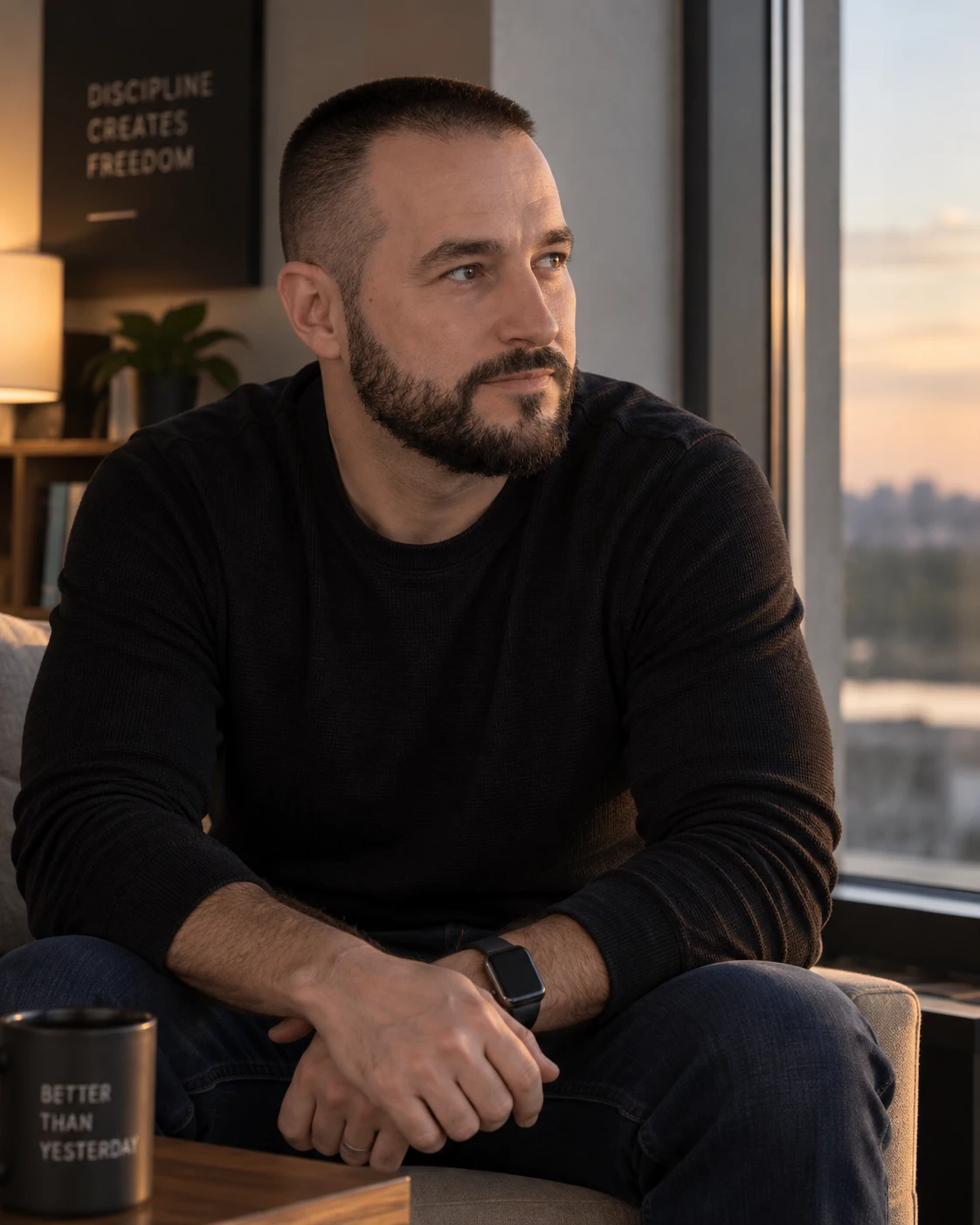
For most of my life, when something changed, I looked for another way forward. Basketball ended, so I built a career in technology. I came to the United States and had to start over, so I took the job that was available and worked my way into larger responsibilities. A major accident in 2004 changed what my body could do, so I searched for a livelihood that could survive even when I could not depend on physical work.
That search led me into real estate, lending, coaching, education and business. I learned how to create opportunities, solve problems and keep moving. For a long time, that ability became part of my identity.
But grief and depression did not respond to the same formula.
In 2012, my mother died after going through cancer in Portugal while I was living in the United States. I was not there the way I wished I had been, and the guilt stayed with me. I kept working. I kept building. I kept trying to show everyone that I was solid and that everything was okay. I had support around me, but support is not the same thing as replacing someone you lost, and grief does not disappear because other parts of life are going well.
From the outside, a person can look capable, busy and successful while something underneath is slowly becoming harder to hold together. That was happening to me long before I was willing to call it what it was.
There was no single morning when everything disappeared. Grief, pain, responsibility, mistakes and declining mental health stacked on top of one another until the life I was presenting and the life I was actually living were no longer the same.
My mother’s death changed me. I continued building businesses and helping other people, but I did not fully understand how much guilt and loss were following me into everything else.
The damage from earlier injuries had followed me for years. In February 2023 I finally had surgery on my neck, including disc replacement and fusion. In December 2023 I had major lower-back surgery. The two procedures and recovery consumed much of the following year and reduced the consistency I had always expected from myself.
Business, finances, credit, relationships and confidence were all taking hits. I had spent years building things I was proud of, and by the end of 2024 I had lost much of that stability. It did not feel like one dramatic failure. It felt like watching parts of a life disappear a little at a time.
In 2025, depression reached the point that I was hospitalized while experiencing suicidal thoughts. Later that year, I agreed to step away from a brokerage partnership I had helped build because my health and inconsistency were affecting my partner and agents. That decision hurt, but continuing to pretend I could carry the same responsibilities would have hurt other people more.
My wife, our children and I made a major move and started a new chapter. I decided to stop carrying forward things that were not helping me become a better father, husband, family member, friend or person. The goal was not to recreate the old life exactly. It was to decide what deserved to come with us.
I can point to grief, chronic pain, surgeries and depression and say they affected my judgment, energy and consistency. That is true. It is also true that I made mistakes. I allowed people and situations into my life that were not compatible with where I was trying to go. I stayed in some things too long. I made decisions I would make differently today.
Rebuilding has required me to hold both truths at the same time: some things happened to me, and some things were mine to own.
That has changed how I think about resilience. I do not see it as pretending to be strong. I see it as getting honest about what is actually happening, taking responsibility for what belongs to you, getting help for what you cannot carry alone and making the next decision from reality instead of from the image you are trying to protect.
That is part of why I want to talk about it honestly. The impact is not limited to how someone feels, and it can be hidden for a long time.
You can know what needs to be done and still struggle to do it. When that continues, missed decisions and inconsistent follow-through begin affecting other people too.
Years of financial progress can deteriorate quickly when health, work capacity and decision-making all change at the same time.
You can care deeply about people and still withdraw, stop responding, make poor choices or struggle to be the person you want to be around them.
When the things you were known for doing well suddenly become difficult, the question can shift from “What happened?” to “Who am I now?”
For a long time, I thought some parts of life were better kept private. I understand why people do that. There is a difference between telling your story and turning every wound into public content.
But I also know what it feels like when motivational advice sounds ridiculous because getting through the day already feels like an accomplishment. I know what it is like to look at everything that went wrong and wonder how you are supposed to begin again.
I am not a therapist or a mental-health professional. I am sharing lived experience, not treatment, diagnosis or clinical advice. If this page does anything useful, I hope it reminds someone that asking for real help is not the opposite of resilience. Sometimes it is part of it.

Rebuilding does not always mean getting your old life back.
Sometimes it means deciding what the next version of your life is going to look like.The resources below are for people in the United States and are provided simply to help you find support.
In the United States, if you or someone else is in immediate danger or experiencing a life-threatening medical emergency, call 911 or go to the nearest emergency department. If you are outside the United States, use the emergency or crisis-support services available where you live.
This is not a mental-health program and it is not daily motivation. It is an occasional email when Bruno has something useful to share about resilience, reinvention, responsibility and moving forward after the plan changes.
You can unsubscribe at any time. This list is for Bruno's personal notes and is not used to infer or market based on a health condition. Privacy.
ConnectWithBruno first existed in 2016. Ten years later, I am rebuilding it while I am rebuilding parts of my own life.
I brought forward what still feels true: real estate, business, technology, education, speaking, connecting people with useful resources and the belief that experience becomes more valuable when it can help someone else.
I left behind the need to make the story look perfect.
I cannot promise that everything gets fixed, and I cannot tell anyone how long rebuilding takes. I can say that losing part of what you built does not erase what you learned, who you helped or your ability to decide what comes next.
I am still creating mine.